
Dunlap Is Sequatchie County’s Only Incorporated City
Sequatchie County has exactly one incorporated city: Dunlap. The 2020 Census counted 5,357 people there, inside a county of 15,826. Other named communities, including the Sequatchie CDP, are not municipal governments. A place name alone creates no city court or warrant desk. Dunlap's municipal court operates beside the county's Circuit, General Sessions, and Juvenile courts. A city ordinance citation lands on a different docket than a county traffic case or a Circuit criminal matter, even though all of these offices sit in Dunlap.
Sequatchie County Municipal Court Warrants
Dunlap is the only municipal court seat in Sequatchie County. Its City Court hears ordinance matters and city proceedings. The city charter gives the court local jurisdiction and warrant-on-affidavit authority. That power is real, but it has limits. The charter creates no public warrant portal, and the court does not handle every process in the county. For a city case, call the City Court Clerk and ask whether the record shows a citation, an FTA, an unpaid fine, a capias, or another order. General Sessions and Circuit matters route through the Circuit Court Clerk instead. A city payment never resolves a county case. The Tennessee AOC municipal courts page lays out the statewide context for where Dunlap's court fits.
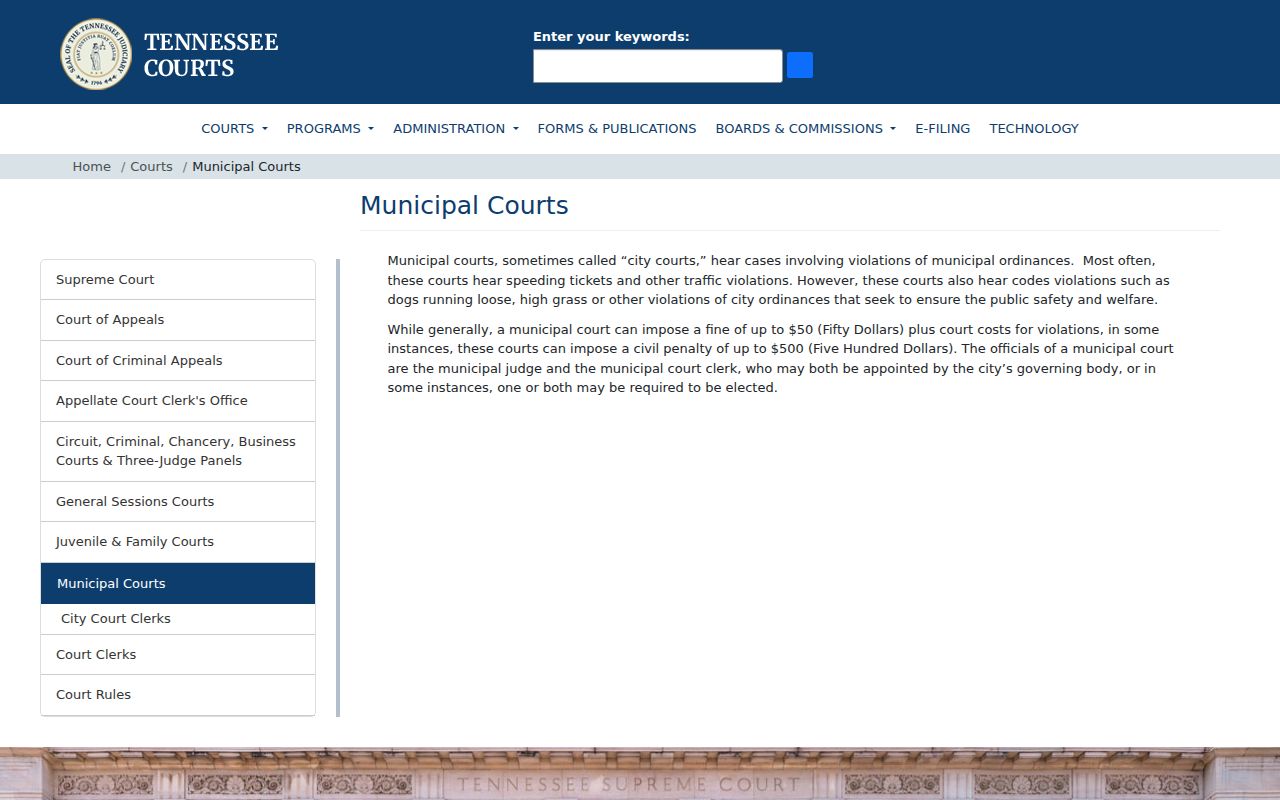
The Tennessee AOC municipal courts overview describes the statewide court layer. Dunlap's local schedule and phone come from the city itself, not from Sequatchie County.
Sequatchie County Cities With Municipal Courts
Sequatchie County's local roster holds one incorporated city profile, Dunlap. A community name or census-designated place proves nothing more. Treat any other
as an assumption until an office confirms it. The distinction matters. A city-court warrant, a county bench warrant, and a Circuit capias can each demand a different clerk and a different remedy. Dunlap City Court is the municipal contact, while General Sessions and Circuit questions go to the Circuit Court Clerk. The city lists its own judge and clerk; the county directory separately names the court offices and the Sheriff.
| Place | Court | Warrant or case route | Phone |
|---|---|---|---|
| Dunlap | Dunlap City Court | City ordinances and city-court matters | (423) 949-3319 |
| Other named communities | No separate municipal court identified | Use the court named on the citation | Confirm with the issuing clerk |
Sequatchie County Municipal Warrant Search Gap
Dunlap's residents page publishes court contacts, a twice-monthly schedule, and a weekday fines-and-fees location. That is helpful, but it stops short. No citation-number search, active-warrant roster, online payment control, or status API appears on it. The Sheriff's website posts no city roster either. Call the City Court Clerk at (423) 949-3319 to ask about a Dunlap file. County process belongs to the Circuit Court Clerk at (423) 949-2618, along with the Sheriff or Justice Center. The county's E-911 contact page routes phone calls; it is not a search menu.
Checking a Municipal Court Warrant
Start by giving the city clerk the name on the citation. Add any case or citation number and the approximate court date. Ask whether the matter is a city ordinance case, whether a missed setting or payment problem shows up, and whether an appearance needs scheduling. Dunlap offers no online form or current status code. If the city record hints at law-enforcement process, ask whether Dunlap Police or the Sheriff holds a related entry and how a court order reaches that agency. Keep your city receipt or recall order. A clerk can walk you through procedure. Only the judge decides whether a warrant is recalled, so treat the clerk's word as guidance, not a ruling. Sequatchie County's split dockets make these questions worth asking early.
Sequatchie County Dunlap Warrant Authority
The Dunlap charter, maintained by UT MTAS, describes City Court jurisdiction and allows a warrant on affidavit for an offense. That authority belongs to the municipal court and its own cases. It does not turn the charter into a docket, a search service, or a warrant list. Think of it as the rulebook, not the records. The Dunlap charter text is the source for that local authority in Sequatchie County. Before paying or appearing on a citation, contact the city clerk and ask which current rule applies.
Inside a Municipal Court Warrant
A warrant form can carry a lot of detail: case number, court and county, charge, process label, bond amount, initial appearance date, issue information, and officer return. The statewide blank capias form is only a schema example, so it tells you the fields, not any live Dunlap warrant. Do not guess at a city case-number format. The model form also holds personal fields that belong out of public view. Ask the city clerk which parts of a record can be inspected and whether confidential material gets redacted. A public records request can obtain an existing document. It cannot conjure a new warrant status list for Sequatchie County.
| Municipal case | City docket and citation or case identifier. |
|---|---|
| Process | Warrant, summons, bench process, or other court order. |
| Payment or bond | Any balance or bond entry recorded by the court. |
| Return or recall | Later officer or court action, if filed in the record. |
Sequatchie County Warrant Routes Split in Dunlap
A city ordinance matter starts with Dunlap City Court. A General Sessions traffic or misdemeanor case routes through the county Circuit Court Clerk. The Sheriff stays the main county law-enforcement contact. The offices sit close together in one small town. The dockets, payment rules, and recall decisions are not interchangeable at all. For the full picture, the Sequatchie County warrant records overview shows how the city, county clerk, and Sheriff routes fit together, without treating Dunlap City Court as a countywide warrant search.
Dunlap City Court’s Calendar Is Not a Warrant Event
Dunlap's city court keeps a routine calendar, and it is easy to mistake for more than it is. Sessions fall on the second Tuesday at 5:00 p.m. and the fourth Thursday at 1:30 p.m., both held at the Justice Center, 119 Church Street. Fines and fees are handled at the City Justice Center between 7:30 a.m. and 4:00 p.m., Monday through Friday. Call ahead before you count on any of those times. This is an ordinary court schedule for Sequatchie County's largest city, not a warrant roundup or amnesty night, and it promises nothing about resolving another court's process there. The city page posts no bond schedule either, and it never says whether paying alone recalls a warrant.
How to Resolve a Municipal Court Warrant
Start with a phone call to the City Court Clerk, before you drive anywhere. Ask three things. Is payment enough by itself? Does the judge want an appearance? Will a motion, a reset, or bond be part of the fix? The city offers a weekday payment route, but it publishes no warrant-recall rule and no same-day hearing promise for Dunlap or the rest of Sequatchie County. Once you have paid or appeared, keep your proof and ask the clerk whether the docket changed. If Dunlap Police or the Sheriff also holds an entry, confirm that office's record separately. For real advice on a warrant or a planned appearance, talk to a Tennessee attorney instead of trusting a web search.
Do not assume a city payment closes a county or state-court case. Confirm which court issued each process and what remains open.
Sequatchie County Municipal Warrant Payment Needs Verification
Sequatchie County's municipal payment picture has gaps only the clerk can fill. The city posts no current fee table, no online payment portal, no walk-in surrender instruction, and no rule on how quickly a recall reaches other agencies. The court schedule and payment hours say nothing about whether a warrant can be cleared at the counter. Ask about your specific record before leaving home. If the court tells you the matter is county or state process, move to the Circuit Court Clerk and the Sheriff. The county's adopted Public Records Policy covers requests for existing records, but a records request is not the same as confirmation from the issuing court.