
Searching for a Warrant in Sequatchie County
Sequatchie County publishes no public warrant search form on its own or the Sheriff's website. That leaves the phone. Ask the office that actually holds the file. For county court dates, the Circuit Court Clerk is the first routing point. The Sheriff or Justice Center answers law-enforcement status and custody questions. A Dunlap ordinance case belongs to the city court, so do not assume the county clerk carries that docket. Before you call, have your legal name, date of birth, the court, a likely date, and any case or citation number ready. Those details help an official office find a warrant file. No Sequatchie County portal offers public search fields, so phone contact is the working route.
- Read the paper and identify the court and county.
- Call the correct clerk about the case, setting, FTA, or process.
- Ask the Sheriff or Justice Center whether it has a law-enforcement record.
- Use a specific Tennessee Public Records Act request for an existing document.
- Confirm the next step with counsel or the issuing court before appearing.
Sequatchie County Has No Warrant Search
Sequatchie County has no online warrant lookup. The official Sheriff domain sits behind an under-construction notice, and the county directory links to no active-warrant portal. No warrant phone desk, records account, or public search box appears anywhere. A third-party page claiming to search Sequatchie warrants is no substitute for the county or the issuing court. The Sequatchie E-911 contact page routes the Sheriff through option 2 and Justice Center inmate inquiries through option 1, but that menu is a phone directory rather than a live warrant check. Use the non-emergency route for routine questions, never 911. The official Sheriff website lists the office's contact paths and should be revisited for future public-service changes.
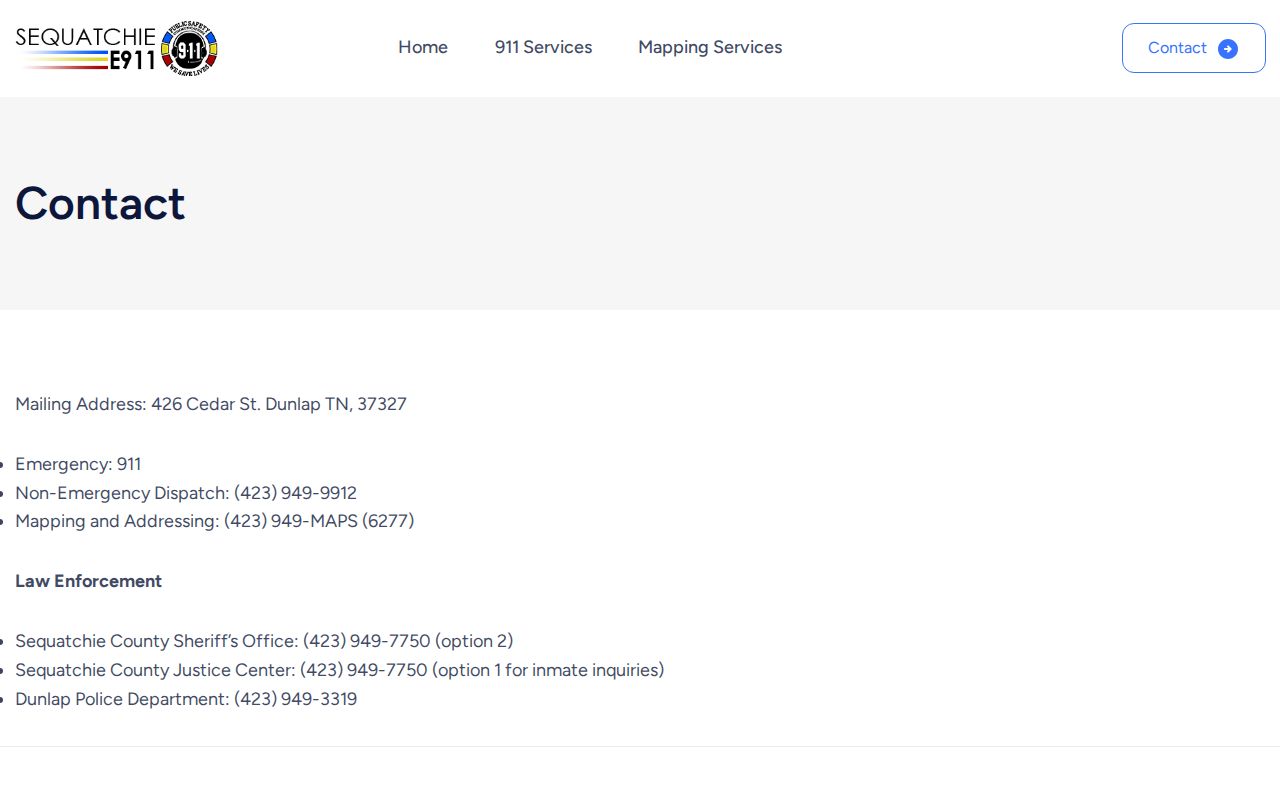
The E-911 page shows Sequatchie County office contact paths. It does not promise that staff can confirm every warrant by phone.
Warrant Search Fields Explained
With no public warrant portal in Sequatchie County, there are no local search fields to fill in. The state's AOC Public Case History tool asks for a case number, case style, party name, business or organization, and a search term. But that tool covers appellate cases only. It cannot tell you whether a county trial-court warrant is active. Dunlap's city page publishes a phone, calendar, address, and payment window, not a citation-number box. The Sheriff page offers no search form either. And the county services search field is not a warrant database, so treat it as a directory aid rather than a records check.
| Official source | Fields or controls seen | What it covers |
|---|---|---|
| Sequatchie Sheriff | No search fields visible | Official site was under construction |
| County site | General services search | Not a warrant index |
| AOC Public Case History | Case number, case style, party, organization, text | Appellate cases only |
| Dunlap City Court | No online citation fields | Phone and in-person information |
| TBI Most Wanted | Program entries and tip links | Curated list, not countywide search |
Sequatchie County Warrants Skip Appellate Search
Tennessee's AOC Public Case History service covers appellate case history only. It can show activity in an appeal. It does not search Sequatchie Circuit or General Sessions warrant files, and a blank result there says nothing about a county court's current process. For a local warrant question, the Circuit Court Clerk holds the court-record route. The AOC courthouse directory helps you locate the courthouse grouping. The official Circuit Court Clerk profile describes the office's records and hours, so verify current details before visiting. Treat it as a routing source, not an electronic warrant lookup.
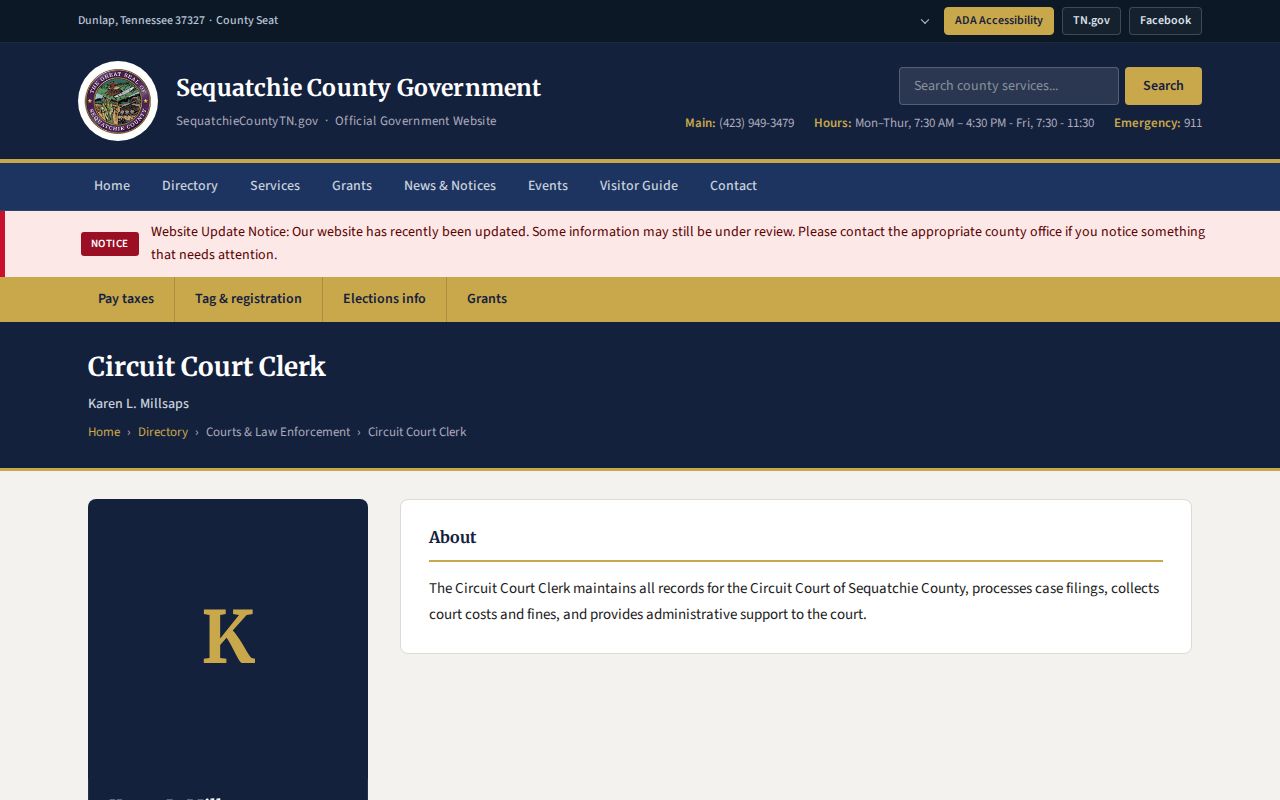
Use the clerk record path to ask which court owns a Sequatchie County case and whether a court file can be inspected. The AOC Sequatchie court-location entry helps identify the courthouse grouping.
The AOC location entry names the Sequatchie County courthouse grouping but displays no trial-warrant search box.
What a Warrant Search Shows
When a warrant record surfaces, it may carry the case number, court and county, process type, charge, bond amount, initial appearance date, issue date, and clerk signature. Tennessee's blank capias form also has an officer-return area showing an executed or not-found result. Sequatchie County publishes no local entry format for comparison. So ask the office directly whether it has a court record, a service entry, or both. A court's recall order and an agency's service status are different record events. One does not close out the other. The county posts no code key, number prefix, or update timetable, so staff should explain the current field labels before you rely on them.
| Case identifier | Case or citation number, if assigned and known. |
|---|---|
| Issuing court | The court or authorized official that controls the process. |
| Process and charge | The warrant, capias, summons, or other order and its stated offense. |
| Bond and appearance | Amount or appearance details, when the court has set them. |
| Officer return | Service information entered by an officer, if a return is filed. |
Sequatchie County TIES Warrant Search Gap
TIES, TCIC, and NCIC are criminal-justice systems built for authorized agencies, not public self-search tools. TBI's Most Wanted program is a curated statewide selection with its own eligibility rules. Neither is a complete public list of Sequatchie County warrants. For a local status check, use the issuing clerk and the Sheriff. Readers who want the statewide picture can open the TBI TIES overview, no, the correct page is the TBI TIES overview, which explains the system's law-enforcement role. The CJIS page describes agency systems, not a citizen login. The public cannot sign in and run a county name search.
Where to Check Warrants in Sequatchie County
Route your Sequatchie County warrant check by office. The Circuit Court Clerk handles county case and setting questions. Dunlap City Court runs the city ordinance process. The Sheriff or Justice Center confirms law-enforcement status. Juvenile matters are restricted, so a public name search is not an appropriate route there. The clerk can point you to the right record holder. The AOC courthouse finder helps with location information, but it does not replace direct confirmation. If court and law-enforcement records differ, ask each office what its own file currently shows and whether an order or return has been entered. For the fuller picture, the Sequatchie County warrant records overview lays out the clerk, Sheriff, and City Court roles, and the Tennessee AOC courthouse finder advises users to verify addresses.
Sequatchie County Warrant Lookup Gaps
No public Sequatchie County warrant list is complete enough to settle the question on its own. A blank result proves nothing. A case can sit in a lower court, involve juvenile or sealed material, have been entered only days ago, or live in an agency system the public simply cannot search. The TBI's list is selective by design, so it never covers every outstanding warrant either. For a real answer, work the phones. Ask the clerk of the specific court to check its docket, then ask the Sheriff whether that office holds a related entry on the same person. A Dunlap ticket goes to the City Court Clerk. Third-party warrant lookup sites pull from scattered sources, so their results, good or bad, are never official confirmation of an active warrant.
Sequatchie County Warrant Records by Request
Sequatchie County handles warrant records requests through its adopted Public Records Policy. You can ask to inspect a record or get a copy of one that already exists and is not exempt. Name the record clearly in your request. Give the date range and the case or citation number too. One thing the policy does not do: it will not make an office run a live warrant search for you or build an index that reaches across courts. When an office cannot produce the records promptly, the policy sets a deadline of seven business days for a written response that grants, denies, or explains the delay. The Sequatchie County request policy spells out the local rules, and the Comptroller’s TPRA FAQ covers the access rules behind them. If you just need a quick status answer on an outstanding warrant, skip the paperwork and call the clerk or Sheriff directly instead of waiting on a copy request.
Restricted Warrants and Access Rules
Tennessee’s Public Records Act opens most records to citizens of the state, but the door is not wide open for everything. Juvenile protections, active investigations, court seals, and statutory exceptions can all keep a warrant record closed. A request should name the specific record and go to the office that holds it, and Sequatchie County allows both inspection requests and written copy requests for material that already exists. If staff cannot fill the request right away, the county policy gives them seven business days to respond in writing with a production, a denial, or a reason for delay. Keep in mind that this is a status notice rather than an instant search. The Sequatchie County records policy lists the local request fields, and you can ask for redaction when protected details appear in the file. The Tennessee Comptroller TPRA FAQ explains who may inspect, how copying works, and what response rules apply, and that official page lays out the access guidance in full.
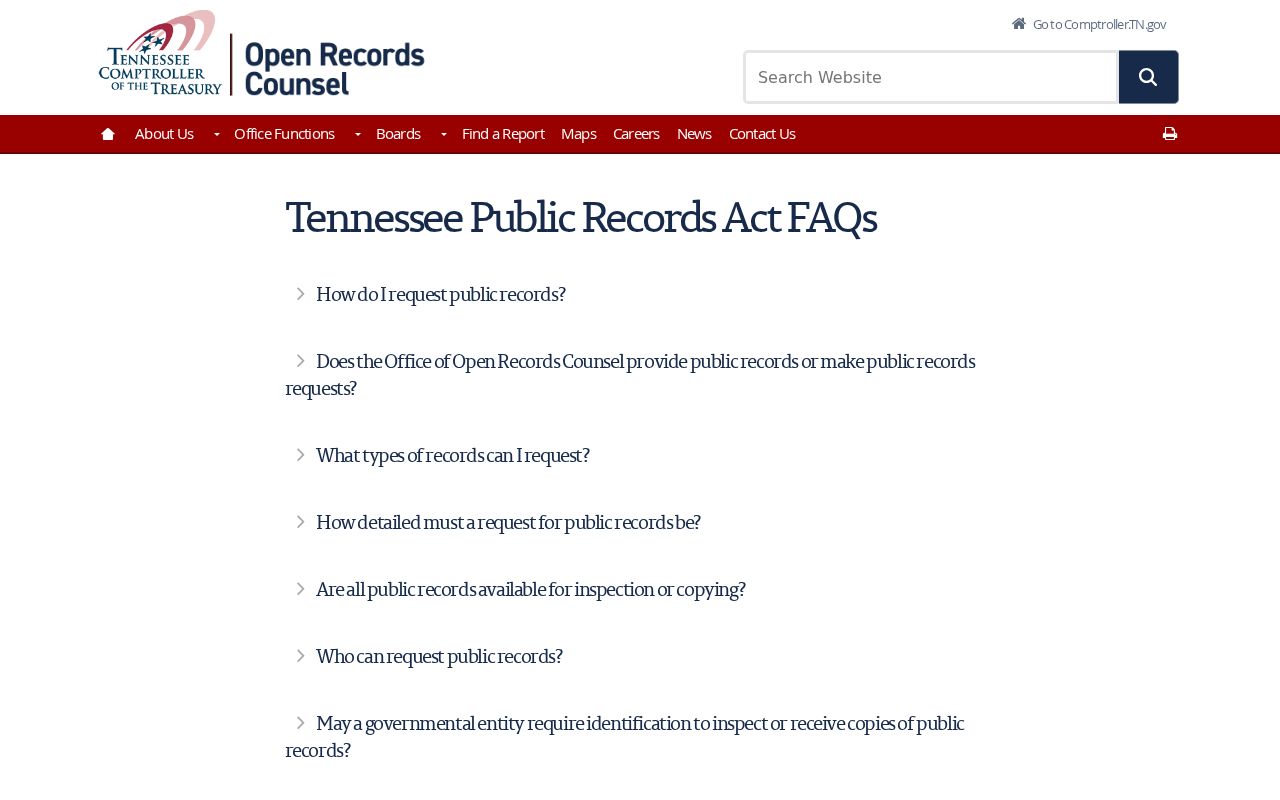
The Sequatchie County form still controls the local request route. It asks for a detailed description of the existing record you want.